A last mile delivery service moves an order on its final leg: from your kitchen, store or warehouse to the customer who ordered it. You hand the order over, and the service supplies the driver, the dispatch, the tracking and the proof that it arrived.
That last step is short, but it is the one your customer actually sees. This guide covers how last mile delivery works, the main delivery types, what to look for in a partner, and how restaurants and retailers use one without building their own fleet.

Key Takeaways
- A last mile delivery service handles the final trip from your business to the customer, including drivers, dispatch, tracking and proof of delivery.
- Deliveries usually fall into three types: on-demand, scheduled and routed.
- The things that matter most are driver quality, live tracking, photo proof of delivery and a real person to call when something goes wrong.
- You can outsource all of your deliveries, keep your own drivers, or mix the two.
What Is a Last Mile Delivery Service?
“Last mile” is the logistics term for the final stage of delivery. Goods have already been made, packed or cooked; the last mile is the trip from the place they sit to the customer’s door, desk or front office. You will also see it called “final mile delivery.” The two terms mean the same thing.
A last mile delivery service is a company that runs that stage for you. Instead of hiring, scheduling and insuring your own drivers, you send orders to the service and it gets them delivered. For a restaurant that might be a 40-person catering order going to an office. For a retailer it might be same-day orders from a store or a microhub. For an online brand it might be a daily batch of local packages.
Demand for this kind of delivery keeps growing. The U.S. Census Bureau estimates that e-commerce accounted for 17.1 percent of total U.S. retail sales in the second quarter of 2026 (Census Bureau Quarterly Retail E-Commerce Sales report). Every one of those orders needs a last mile.
How Last Mile Delivery Works, Step by Step
The details vary by provider, but most last mile deliveries follow the same sequence:
- The order comes in. It arrives from your POS, online store or ordering platform, or is entered by hand.
- Dispatch and driver matching. The service assigns a driver whose vehicle and experience fit the order.
- Pickup. The driver collects the order at the scheduled time and checks it against the ticket.
- Live tracking. You and your customer can follow the driver from pickup to drop-off.
- Customer updates. The customer gets messages as the delivery gets close.
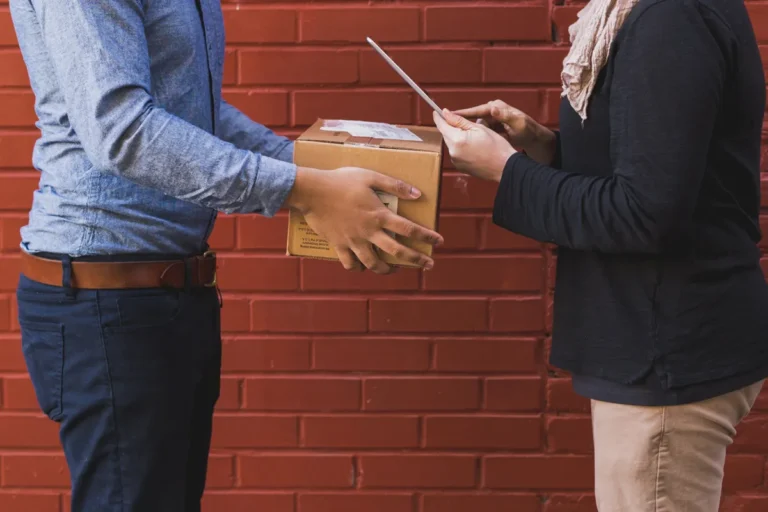
- Proof of delivery. The driver records the drop-off, usually with a photo.
- Exceptions. If something goes wrong, such as a closed loading dock or a wrong address, a support team steps in.
Steps 2 and 7 are where providers differ most. Matching the wrong driver to a large order, or leaving a driver with no one to call, is behind many of the deliveries customers remember for the wrong reasons.
Types of Last Mile Delivery
Not every order moves the same way. The three common delivery types are:
| Delivery type | How it works | Typical use |
|---|---|---|
| On-demand | A driver is dispatched as soon as the order is ready. | Restaurant orders, ghost kitchens, same-day retail |
| Scheduled | The order is booked for a set pickup and drop-off time. | Catering for meetings and events, pre-booked orders |
| Routed | Several orders are grouped into one planned route. | Meal kits, recurring e-commerce and retail deliveries |
Many businesses need more than one type. A restaurant may run on-demand dinner orders and scheduled catering from the same kitchen. Expedite supports on-demand, routed and scheduled deliveries, and its e-commerce delivery options include local same-day delivery, routed delivery, and pre-scheduled and recurring orders.
Why the Last Mile Matters So Much
A customer never sees your prep line or your stockroom. They see the driver, the condition of the order and whether it showed up when promised. A late or careless delivery can undo everything that went right before it, and the customer usually blames the business they ordered from, not the driver.
Timing works in both directions. Early can be as bad as late: food that arrives an hour before a lunch meeting sits and cools, and a package left before anyone is home can go missing. Expedite’s own definition of a successful delivery starts with “accurate and on-time,” which it describes as “not too late and not too early.”
What to Look For in a Last Mile Delivery Partner
Drivers matched to the order
A small car is fine for a sandwich order and wrong for catering for 80. Ask how the service decides which driver gets which order. Expedite matches orders to drivers based on vehicle type, experience and brand alignment, and puts it simply: “We don’t want a driver in a tiny car showing up for your large delivery.”
Live tracking and branded updates
Your customer should be able to see where the order is without calling you. Look for tracking from pickup to drop-off and updates that carry your brand rather than the delivery company’s. Expedite provides live tracking and branded customer updates, including branded tracking links.
Photo proof of delivery
A photo of the order in the right place settles most “where is it?” questions in seconds. It also protects you if a client says something never arrived.
A real person when things go wrong
Addresses are wrong, buildings lock their doors, and clients change plans. Find out who answers when a driver is stuck. Expedite’s FAQ says its customer support team is available 24/7.
Coverage and flexibility
Check that the service covers your markets and works with your setup. Expedite operates in more than 200 markets, integrates with POS systems, and lets you use your own drivers on the Expedite Driver App, its partner fleets, or both.
In-House Drivers, Outsourced, or Both?
Running your own fleet gives you control, but it also means hiring, scheduling, covering call-outs and keeping drivers busy on slow days. Outsourcing removes that overhead and makes it easier to handle spikes in volume. Our guide to choosing between in-house and outsourced delivery drivers walks through the trade-offs in detail.
Many businesses end up with a mix: their own drivers for regular routes and a partner for overflow, catering or new areas. If you take that route, make sure both groups work in the same system so tracking, proof of delivery and reporting look the same no matter who drove.
How Restaurants and Retailers Use a Last Mile Service
Restaurants use a last mile delivery service for catering and on-demand orders. Expedite’s restaurant and catering delivery is built around catering-focused drivers and supports everything from high-touch catering drop-offs to same-day orders and ghost kitchens, with no in-house fleet needed.
Retailers use it to offer local delivery from stores, warehouses or microhubs. Expedite’s retail delivery adds smart driver matching by order type, size and route, real-time tracking with delivery photo confirmation, and POS and order management system integrations.
Online brands use it to offer fast local delivery at checkout. Our post on local delivery service for online brands covers that set-up.
How Expedite Handles the Last Mile
Expedite is an API-first delivery solution that connects businesses with a network of independent, professional drivers. It handles catering, on-demand restaurant orders, meal kits, e-commerce and retail. Expedite defines a successful delivery with four tests: pickup and delivery were accurate and on time, the right driver was matched to the order, the proof of delivery was a quality photo, and there were zero client complaints.
Frequently Asked Questions
What is a last mile delivery service?
It is a company that handles the final leg of an order, from your business to the customer. It supplies the drivers, dispatch, tracking and proof of delivery so you don’t have to run your own fleet.
Is final mile delivery the same as last mile delivery?
Yes. Both terms describe the last stage of delivery, from the place an order is prepared or stored to the end customer.
How long does last mile delivery take?
It depends on the delivery type. On-demand orders are dispatched as soon as they are ready, scheduled orders arrive at a booked time, and routed orders follow a planned route. Ask any provider how it handles the delivery windows your customers expect.
What businesses use last mile delivery services?
Restaurants and caterers, retailers, e-commerce brands and meal kit companies are common users. Expedite’s FAQ lists food delivery, e-commerce, healthcare and logistics among the industries it serves.
Can I use my own drivers with a last mile delivery service?
With Expedite, yes. Your drivers can use the Expedite Driver App, and you can use your own drivers, Expedite’s partner fleets, or a combination of both.
Get a Last Mile Delivery Partner That Fits Your Business
If you want reliable last mile delivery for catering, retail or e-commerce orders, Schedule a demo with Expedite or contact our team.