Conference catering is a schedule problem as much as a menu problem. A one-day event can need breakfast, a morning break, lunch, an afternoon break and a reception, and each has to land in a short gap between sessions. The way to get it right is to build the catering plan from the agenda and registration data, confirm the venue’s rules early, and book every delivery with a fixed arrival time and an on-site contact.
This guide walks through planning, menus, dietary needs, venue logistics and delivery for conferences of any size.

Start With the Agenda, Not the Menu
List every point in the day when attendees will expect food or drinks, then attach a time and headcount to each:
- Arrival and registration: coffee and a light breakfast.
- Morning break: coffee refresh, water and snacks.
- Lunch: the largest delivery of the day.
- Afternoon break: coffee, snacks or something sweet.
- Reception or networking hour: appetizers and drinks, if the venue allows them.
Headcounts often change across the day. Some guests skip breakfast, and some leave early on the last day. Use registration data and past events to set a number for each meal instead of ordering the full count every time.
Check the Venue's Catering Rules Early
Venue rules decide what is possible, so check them before you request quotes:
- Exclusive caterers. Many hotels, conference centers and university venues require their in-house caterer or charge a fee for outside food.
- Delivery access. Ask where deliveries go: front entrance, loading dock or service elevator, and during which hours.
- Paperwork. Some venues ask outside vendors for a certificate of insurance or a vendor list before the event.
- Equipment. Find out whether tables, linens, power for warmers and trash removal are provided.
Share these rules with the restaurant and the delivery team before the event. A driver who arrives at the main entrance when the venue requires the loading dock can lose 15 minutes of a 20-minute break.
Choosing Conference Catering Menus
- Boxed lunches are quick to hand out, easy to label for dietary needs and easy to carry into a session.
- Buffet lunches suit longer breaks and seated meals, and usually cost less per person.
- Grab-and-go breaks such as fruit, bars and pastries keep lines short.
- Coffee service needs to be refreshed, not just delivered once. Plan a second drop or larger carriers for long mornings.
For multi-day events, vary the menu each day and keep the delivery schedule the same, so the venue and the drivers know what to expect.
Plan for Dietary Needs at Registration
Ask attendees for dietary requirements on the registration form, then total them for each meal. Order labeled meals for each group, pack them separately and place them where people can find them, such as a separate table or boxed meals with names on them. Brief the person receiving the food so they know which bags hold the special-diet meals.
Conference Catering Delivery Logistics
Conference breaks do not move. If lunch is at 12:15, food that arrives at 12:20 means a line of attendees watching trays being unpacked. Build each delivery around the break:
- Arrival target. 15 to 30 minutes before the break for drop-off orders, and 30 to 45 minutes for buffet setups.
- Venue directions. Entrance, dock, elevator, room name and floor, all in the delivery notes.
- On-site contact. One person with a mobile number who can meet the driver, plus a backup.
- Tracking. A live tracking link so the event team can see when food is close.
Expedite provides live tracking and branded customer updates from kitchen to doorstep, and its driver app includes geofencing and smart arrival tracking, driver notes and photo proof of delivery. For the restaurant, Expedite’s catering delivery service connects orders with professional, catering-focused drivers in more than 200 markets nationwide.
Keeping Food Safe Between Sessions
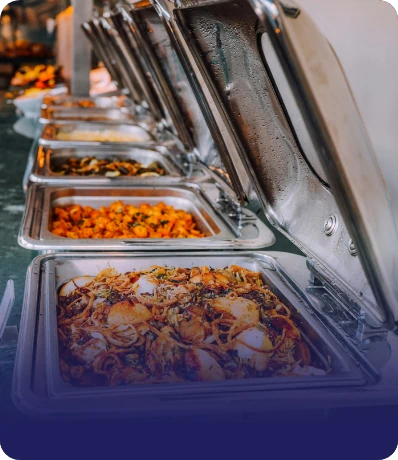
Food often arrives before a break and sits until the session ends. The FDA buffet guidance recommends keeping hot food at 140°F or warmer and cold food at 40°F or colder, and discarding perishables left at room temperature for more than 2 hours (1 hour above 90°F). Use chafing dishes or insulated carriers for hot food, keep cold items on ice if they will be out for a while, and clear leftovers once the time limit is reached.
A Simple Conference Catering Checklist
- Agenda mapped to meals, with times and headcounts for each.
- Venue rules confirmed: outside food, delivery access, paperwork, equipment.
- Dietary needs collected at registration and totaled per meal.
- Each delivery booked with an arrival time, room, contact and backup contact.
- Coffee refreshes and afternoon breaks scheduled, not forgotten.
- Food safety plan for anything that will sit out during sessions.
Early registration often means a breakfast order. Our guide to breakfast catering delivery covers the morning side, and our post on catering for 50 people covers sizing a large lunch.
Key Takeaways
- Build the conference catering plan from the agenda, with a time and headcount for every meal and break.
- Check the venue’s rules on outside food, delivery access and paperwork before you book.
- Boxed lunches suit short breaks and dietary needs, buffets suit longer seated meals.
- Time deliveries 15 to 45 minutes before each break, depending on setup.
- Keep hot food at 140°F or above and cold food at 40°F or below while it waits.
Frequently Asked Questions
How do you plan catering for a conference?
Start with the agenda and registration numbers. Map each meal and break to a time, set a headcount for each one, collect dietary needs during registration, check the venue’s catering and delivery rules, and then book each delivery with an arrival time and an on-site contact.
Can I bring outside catering into a conference venue?
It depends on the venue. Many hotels, conference centers and university venues use an exclusive in-house caterer or charge a fee for outside food. Ask before you book food, and get the venue’s delivery rules in writing.
Are boxed lunches or buffets better for conferences?
Boxed lunches are faster to hand out, easier to label for dietary needs and work well when attendees eat during short breaks or take food into sessions. Buffets suit longer meal breaks and seated lunches, but need more space and setup time.
How far ahead should conference catering arrive?
Plan for drop-off orders to arrive 15 to 30 minutes before a break, and 30 to 45 minutes ahead if the order needs a buffet setup. Breaks are short, so food that arrives during a session needs a plan for holding it safely.
How do you handle dietary restrictions at a conference?
Ask for them on the registration form, total them for each meal, and order labeled items for each group. Pack special-diet meals separately and give attendees a clear way to find them, such as a separate table or names on boxed meals.
If you deliver catering to conferences and events and need drivers who can keep to the agenda, schedule a demo with Expedite today.