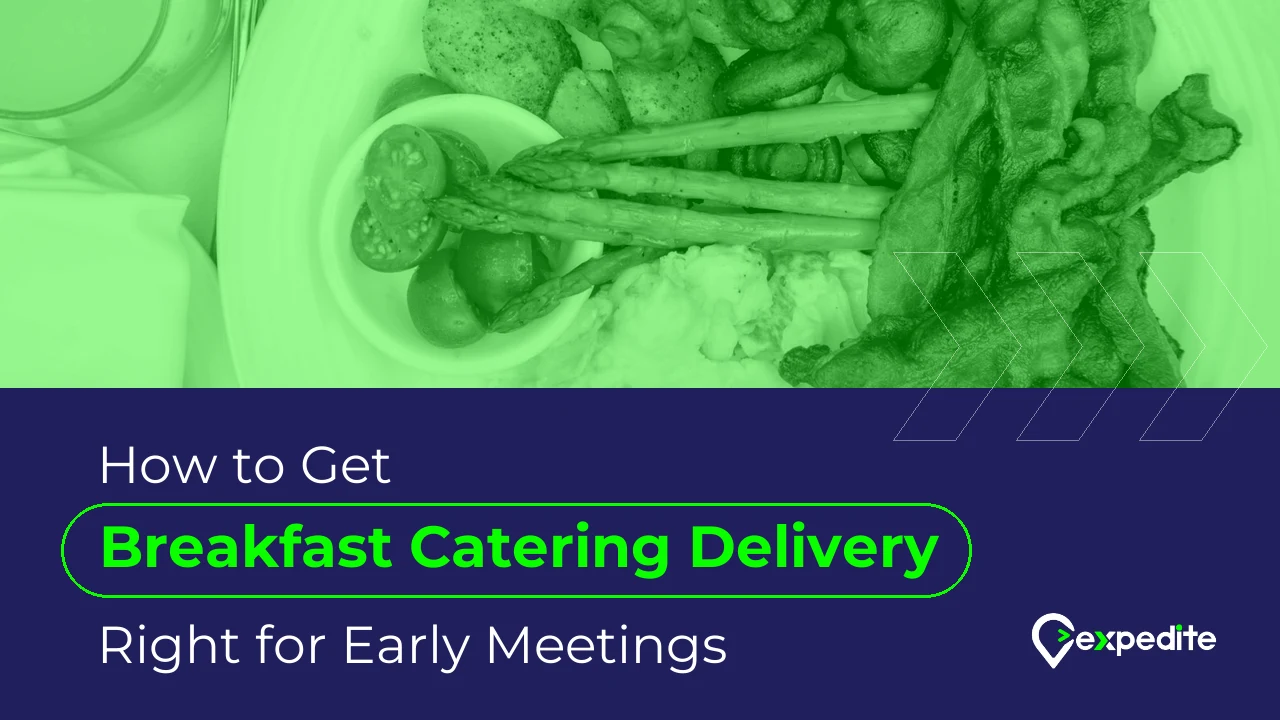
Breakfast catering delivery works when three things happen before the meeting starts: hot food arrives hot, coffee is ready to pour, and the setup is done before the first guest walks in. Because the order is prepped and driven in the earliest hours of the day, there is less slack than at lunch. Planning the menu, cutoff time, packing and handoff the day before is what keeps it on track.
This guide covers both sides: what clients should expect when they order breakfast catering, and what restaurants need to do to deliver it well.

Why Breakfast Catering Delivery Is Harder Than Lunch
Breakfast orders squeeze the whole process into a short window:
- Early prep. The kitchen may start before normal opening hours, often with a smaller crew.
- Short holding times. Eggs, breakfast meats and pancakes lose quality quickly once they leave the line.
- Buildings that are not fully open. Front desks, loading docks and freight elevators may not be staffed yet.
- Clients who are still arriving. The person who placed the order may be on their way in when the driver shows up.
- A fixed start time. A breakfast meeting usually has a hard start, and a late order is noticed by everyone in the room.
What to Include in a Breakfast Catering Order
Most office and event breakfast orders are built from the same pieces:
- Hot items: egg dishes, breakfast sandwiches or burritos, potatoes, breakfast meats, pancakes or French toast.
- Lighter items: fruit, yogurt and granola, pastries, bagels and spreads.
- Drinks: coffee in insulated carriers with cups, lids, cream and sweetener, plus juice or water.
- Serviceware: plates, napkins, utensils, serving spoons and tongs.
- Labeled options: vegetarian, gluten-free or dairy-free items, clearly marked.
Boxed or individually wrapped items such as breakfast sandwiches travel better than loose scrambled eggs, and they cut setup time for meetings that start right away.
How to Plan the Timing
Work backward from the time people will eat, not the time the meeting is booked:
- Set the arrival target. Plan for the food to arrive 15 to 30 minutes before guests eat, which leaves time for setup without long holding times.
- Set the pickup time. Add drive time, plus a buffer for morning traffic and building check-in.
- Set the ready time. The order should be packed and labeled before the driver arrives, so pickup does not turn into a wait at the counter.
- Set the cutoff. Restaurants often need breakfast orders earlier than lunch orders so the morning crew can be scheduled.
Timing cuts both ways. Expedite’s definition of success includes pickup and delivery that are “not too late and not too early,” because a driver who shows up 45 minutes early to a closed office causes its own problems. For more on hitting delivery windows, see our post on office lunch delivery timing.
Packing Breakfast Catering Delivery So It Travels Well
Food safety rules do not change because it is early. The FDA guidance on serving safe buffets says hot foods should be kept at an internal temperature of 140°F or warmer and cold foods at 40°F or colder, and that perishables left at room temperature for more than 2 hours should be thrown out (1 hour above 90°F).
- Pack hot and cold items in separate insulated bags or carriers.
- Vent containers for crispy items such as hash browns and bacon so steam does not make them soggy.
- Seal coffee carriers and pack them upright, away from food trays.
- Label every bag with the client name, contents and number of bags, for example “Bag 2 of 4.”
- Put the order ticket on the outside so the driver can check it at pickup.
Getting the Handoff Right
Most breakfast problems happen at the building, not on the road. Confirm these details the day before:
- On-site contact name and mobile number, plus a backup contact.
- Full address with suite or floor, and which entrance to use.
- Building check-in steps, parking or loading zones, and whether the lobby is staffed at that hour.
- Whether the client wants a drop-off or a full setup, and where in the room the food goes.
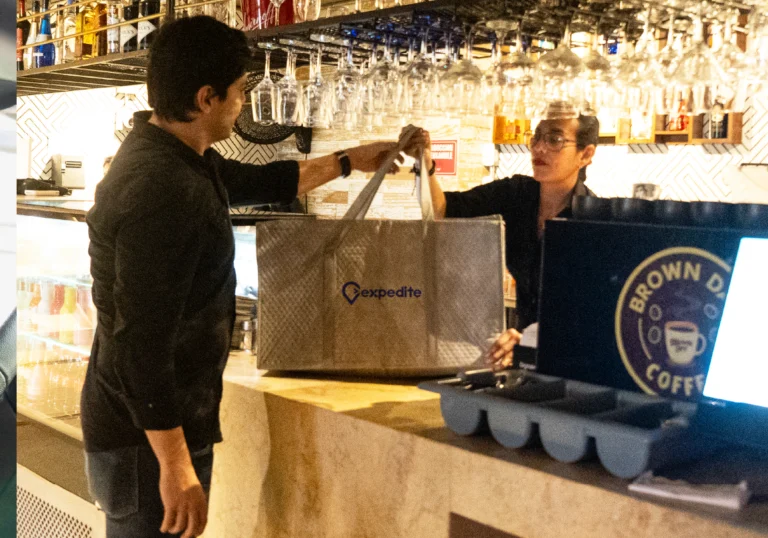
Put all of that in the delivery notes. Our guide to writing catering delivery instructions has a template you can reuse. The Expedite Driver App supports driver notes and special instructions, live status updates and photo proof of delivery, so the restaurant and the client can see when breakfast has arrived and where it was left.
Common Breakfast Catering Mistakes
- Missing coffee supplies. Coffee without cups, lids or cream is the complaint people remember.
- Hot food in sealed containers. Steam turns crisp items soggy before the meeting starts.
- No backup contact. If the person who ordered is not in yet, the driver needs a second name.
- A ready time that equals the pickup time. Every minute the driver waits comes out of the delivery window.
- Arriving far too early. Food left in a lobby before anyone is there to receive it can sit outside safe temperatures.
When to Use a Delivery Partner for Breakfast Orders
Morning catering is often where restaurants first run short of drivers, because staff drivers are scheduled for lunch and dinner. Sending early orders to a partner avoids building a separate morning shift. Expedite’s restaurant delivery solutions connect restaurants with vetted, professional, catering-focused drivers, with live tracking and branded customer updates from kitchen to doorstep. Expedite also states that its customer support team is available 24/7. If your breakfast orders tend to come ahead of bigger events, our guide to conference catering delivery covers multi-meal days.
Key Takeaways
- Plan breakfast catering delivery backward from the time guests eat, with arrival 15 to 30 minutes before.
- Keep hot food at 140°F or warmer and cold food at 40°F or colder, and pack them separately.
- Coffee supplies, labels and a backup contact prevent the most common complaints.
- Arriving too early is a problem too, especially when the building is not open yet.
- A delivery partner can cover early orders without adding a morning driver shift.
Frequently Asked Questions
How far in advance should I order breakfast catering?
Order as early as you can, and at least a day ahead for most restaurants. Early-morning orders often need a prep shift that starts before the store opens, so many kitchens set an earlier cutoff for breakfast than for lunch. Check the restaurant’s cutoff when you book.
What time should breakfast catering arrive?
Aim for the food to arrive 15 to 30 minutes before guests start eating. That gives time to set up coffee and trays without leaving hot food sitting out too long. Arriving much earlier than that can be as much of a problem as arriving late.
What should be included in a breakfast catering order?
Most orders include a hot item or two, something lighter such as fruit, yogurt or pastries, coffee with cups, cream and sugar, and plates, napkins and utensils. Add labeled options for guests who are vegetarian, gluten-free or dairy-free.
How long can catered breakfast sit out?
The FDA advises discarding perishable food left at room temperature for more than 2 hours, or 1 hour if the room is above 90°F, unless it is kept hot or cold. Hot food should stay at 140°F or warmer and cold items at 40°F or colder.
Who delivers breakfast catering for restaurants?
Some restaurants use their own drivers. Others send catering orders to a delivery partner. Expedite connects restaurants with independent, professional drivers who specialize in catering, in more than 200 markets nationwide.
If early catering orders are stretching your team, schedule a demo with Expedite today.