In office lunch delivery, timing is the product. The food can be perfect, but if it lands 30 minutes after the meeting started, the client remembers the wait. If it lands an hour early, it sits in a conference room getting cold.
For restaurants that cater to workplaces, getting the delivery window right is what turns a one-time order into a standing one. This guide covers why timing matters so much, how to set the right delivery window, and what to do on the days when everything is running late.
Key Takeaways
- Aim for a narrow window just before the meal starts. Too early is a failure, just like too late.
- Office buildings add time: loading docks, security desks, elevators and badge-only floors.
- Most of the work happens before pickup: confirming headcount, the room, the contact and the access route.
- Live tracking and fast support turn a late delivery into a manageable one.
Why Office Lunch Delivery Timing Matters So Much
Workplace orders are usually tied to something: a training session, a client meeting, a board lunch. The person who ordered has put their name on it in front of colleagues. When the food is late, the meeting waits; when it is early, they have to deal with it.
ezCater’s Chief Customer Care Officer, Michelle Smart, puts it this way on Expedite’s site: “Ordering food for the workplace is complex and high stakes. It is essential that orders arrive on-time and as-ordered.”
That is why Expedite’s definition of a successful delivery starts with timing that is “not too late and not too early.”
The Cost of Being Early or Late
When food arrives too early
Hot food cools, cold food warms, and salads wilt. Someone has to find space for the trays, and the client may wonder whether the food is still safe. The FDA recommends discarding perishables left at room temperature for more than 2 hours (FDA buffet food safety guidance), and an early drop eats into that window before anyone has picked up a plate.
When food arrives too late
A late lunch delays the meeting or forces people to eat while working. The office manager gets the complaints, and the restaurant usually loses the next order.
How to Set the Right Delivery Window
A good delivery window starts from the meal time and works backward:
| Step | What to plan for |
|---|---|
| Meal start time | Ask when people will actually start eating, not when the meeting starts. |
| Set-up time | Add time if the driver is setting up trays, utensils or chafing dishes. |
| Building access | Add time for the loading dock, security desk, elevators and badge-only floors. |
| Drive time | Use realistic traffic for that time of day, not the empty-road estimate. |
| Pickup buffer | Leave room for a final check of the order at the counter. |
For most office lunches, that means the food should arrive shortly before the meal, with enough time for set-up but not so much that it sits. Large orders need more set-up time; our guide to catering for 50 people covers how bigger orders change the plan.
Office Buildings Add Their Own Delays
- Loading docks and freight elevators. Some buildings require deliveries to come in through the back.
- Security desks. Drivers may need to be added to a visitor list or show ID.
- Badge-only floors. Someone from the office may need to come down and meet the driver.
- Parking. Downtown buildings at lunchtime can mean a long walk from the nearest legal spot.
Each of these is easy to handle when the driver knows about it in advance and painful when they don’t. Our guide on writing delivery instructions for catering drivers shows how to capture them.

Plan Before Pickup
Most late office deliveries are decided before the driver arrives at the restaurant. A short checklist at order time prevents most of them:
- Confirm the headcount and the meal start time.
- Get the exact address, floor, suite and room name.
- Get a contact name and a mobile number that will be answered.
- Ask about the dock, security desk and parking.
- Have the order packed and checked before the driver arrives.
Recurring Office Lunch Delivery Orders
Many offices order lunch on a schedule: a weekly team lunch, a monthly all-hands, or catered meals on in-office days for hybrid teams. Recurring orders are valuable because they are predictable, and they deserve their own routine:
- Save the delivery details once and review them every few weeks, since offices move rooms and change contacts.
- Confirm headcount the day before. Attendance on hybrid days can swing a lot from week to week.
- Keep the same time slot so the kitchen can plan prep around it.
- Ask for feedback after the first few deliveries, while small problems are still easy to fix.
A standing order that arrives on time every week is the easiest catering revenue a restaurant can have. One that arrives late twice in a row usually goes to someone else.
Keep Clients Informed With Tracking
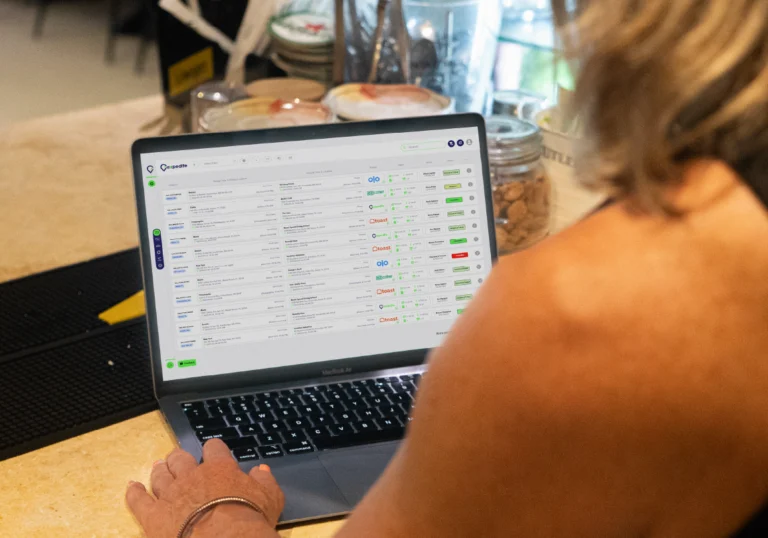
Even well-planned deliveries run into traffic. What clients mind most is not knowing. Live tracking lets the office manager see the food is ten minutes away instead of calling the restaurant to ask.
Branded updates help here too, because the client sees your restaurant’s name rather than a delivery company’s. Our post on white label delivery explains why that matters.
How Expedite Helps With Office Lunch Delivery
Expedite is built for catering delivery. Its platform matches the right driver to each job “with your brand standards in mind,” and provides live tracking from pickup to drop-off along with branded customer updates. The Expedite Driver App includes geofencing and smart arrival tracking, driver notes and special instructions, and photo proof of delivery.
Expedite’s catering delivery for restaurants is designed to scale from five locations to fifty, and its customer support team is available 24/7 when a delivery needs help.
Frequently Asked Questions
How early should office lunch delivery arrive?
Shortly before people start eating, with enough time for set-up. Arriving too early lets food cool and sit; arriving late delays the meeting. Work backward from the meal time, not the meeting start time.
What information does a driver need for an office delivery?
The exact address, floor, suite and room; a contact name and mobile number; and details on the loading dock, security desk, elevators and parking.
How long can catered lunch sit out?
The FDA recommends discarding perishable food left at room temperature for more than 2 hours, or 1 hour if the temperature is above 90 °F.
What happens if an office lunch delivery is running late?
The client should hear about it before they have to ask. Live tracking and a support team that can reach the driver make it possible to give an accurate update.
Deliver Office Lunches on Time
If workplace catering is part of your business, Schedule a demo with Expedite or contact our team.